Literacy stories as a teaching strategy to develop reading comprehension in grade 7-02 at the Institución Educativa San José, Curumaní
Xilena Paola Montes Machado1
Heidin Arce Bolaño2
Yerine Zuley Dajil Turizo3
To reference this article / Cómo citar este artículo / Para citar este artigo: Montes-Machado, X. P., Arce-Bolaño, H. y Dajil-Turizo, Y. Z. (2026). Literacy stories as a teaching strategy to develop reading comprehension in grade 7-02 at the Institución Educativa San José, Curumaní. Revista UNIMAR, 44(1), e4774. https://doi.org/10.31948/ru.v44i1.4774
Received: April 30, 2025
Revision: June 26, 2025
Accepted: November 4, 2025
Abstract
The primary objective of this research was to enhance the reading comprehension of 7th-grade students at the Institución Educativa San José in Curumaní through the use of literacy stories as a teaching strategy. The research was conducted under the pragmatic paradigm, which combines quantitative and qualitative methods and aligns with the mixed methods approach. In terms of research typology, a mixed sequential design approach was adopted. The sample consisted of 30 students; a questionnaire and a field diary were used for data collection. The results show that implementing activities based on literary stories promoted reading comprehension in the specific area; students improved not only their analytical and reflective skills, but also their narrative skills and creativity. Consequently, these strategies can be used as a basis for future professional activities aimed at strengthening reading comprehension and critical thinking.
Keywords: literary narration; pedagogical strategies; teaching; educative development; reading skills
El cuento literario como estrategia didáctica para el desarrollo de la comprensión lectora en estudiantes del grado 7-02 de la Institución Educativa San José, Curumaní
Resumen
Esta investigación tuvo como objetivo principal desarrollar la comprensión lectora de los estudiantes de grado 7. ° de la Institución Educativa San José, Curumaní, a través del uso del cuento literario como estrategia didáctica. El estudio se llevó a cabo bajo el paradigma pragmático, el cual combina métodos cuantitativos y cualitativos, y se alinea con el enfoque de métodos mixtos. En cuanto a la tipología de la investigación, se adoptó un enfoque mixto de diseño secuencial. La muestra estuvo conformada por 30 estudiantes; para la recolección de datos, se utilizaron el cuestionario y el diario de campo. Los resultados muestran que la implementación de actividades con cuentos literarios fomentó la comprensión lectora en el área específica; los estudiantes mejoraron no solo su capacidad de análisis y reflexión, sino también sus habilidades narrativas y su creatividad. En consecuencia, estas estrategias pueden emplearse como base para futuras actividades profesionales orientadas al fortalecimiento de la comprensión lectora y del pensamiento crítico.
Palabras clave: narración literaria; estrategias pedagógicas; enseñanza; desarrollo educativo; competencias lectoras
O conto literário como estratégia didática para o desenvolvimento de compreensão de leitura em alunos do 7.º ano-02 da Institución Educativa San José, Curumaní
Resumo
Esta investigação teve como objetivo principal desenvolver a compreensão de leitura dos alunos do 7.º ano da Instituição Educativa San José, Curumaní, através do uso do conto literário como estratégia didática. O estudo foi realizado sob o alinhamento com a abordagem de métodos mistos. Quanto à tipologia da investigação, foi adotada uma abordagem mista de desenho sequencial. A amostra foi composta por 30 alunos; para a recolha de dados, foram utilizados o questionário e o diário de campo. Os resultados mostram que a implementação de atividades com contos literários promoveu a compreensão de leitura na área específica; os alunos melhoraram não só a sua capacidade de análise e reflexão, mas também as suas habilidades narrativas e criatividade. Consequentemente, estas estratégias podem ser utilizadas como base para futuras atividades profissionais orientadas para o fortalecimento da compreensão de leitura e do pensamento crítico
Palavras-chave: narrativa literária; estratégias pedagógicas; ensino; desenvolvimento educativo; competências de leitura
Introduction
At the Institución Educativa San José in Curumaní, it has become evident that seventh-grade students face significant difficulties in reading comprehension. This skill is considered essential for each student’s academic performance and personal growth. It is worth noting that reading comprehension is important for successfully addressing any subject matter and actively participating in the environment where all human potential is developed. In this regard, traditional learning methods are considered insufficient, as they cannot fully meet the individual learning needs of each student or foster the necessary interest in reading (Núñez-Naranjo et al., 2021).
Consequently, the results of the Saber 5, 7, and 9 tests administered by the Instituto Colombiano para la Evaluación de la Educación (ICFES) showed that seventh-grade students at the Institución Edicativa San José Educational did not achieve the best performance in language skills. This problem concerns not only the school’s administration but also the teaching staff, as it indicates that students’ writing and comprehension skills are not being adequately developed. Therefore, there is a need to seek new and improved educational strategies aimed at optimizing meaningful learning among the students in this study (Rocha & Rocha, 2023).
Given that teenagers need to engage emotionally with information, a new strategy is needed to capture their attention and develop their critical thinking skills. Literary stories serve as an ideal metaphor, as they are short and hold the reader’s interest (Sembiring, 2022). From this perspective, the following research aims to develop a methodology focused on the reading comprehension skills of seventh-grade students at the San José Educational Institution and to use literary stories as a teaching strategy to enhance reading comprehension.
Therefore, we must explore how a methodology can influence students’ interests and analyze whether it can radically change their reading comprehension skills (Jensen et al., 2024).
Consequently, the following research question arises: How can the use of literary stories develop reading comprehension as a teaching strategy among seventh-grade students at the Institución Educativa San José in Curumaní? The main objective of this research is to develop reading comprehension in seventh-grade students at the Institución Educativa San José in Curumaní through the use of literary stories as a teaching strategy, as this would enable students to engage in meaningful learning. Teaching strategies allow students to actively engage in the process, which increases their motivation and commitment (Syafii, 2021).
According to Freire (1989, as cited in Caviedes, 2013), «Critical perception as a cognitive function must be in harmony with an interpretive approach; the act of reading is determined not only by the comprehensive understanding of what is read, but also seeks to connect school experiences with everyday life» (p. 225). For Caviedes, critical perception is a cognitive skill that must be in balance with interpretive ability. Reading is not only about understanding the text itself, but also about connecting what is learned in school with daily experiences.
From the perspective of school life, fostering reading comprehension through stories can substantially enhance school life. Students can view the world from a different perspective, develop empathy and respect, and, as a result, foster a harmonious and collaborative environment. From a social relevance perspective, reading ability is a necessary skill in society; therefore, strengthening this competency in students not only drives better academic outcomes but also prepares them to be informed and critical citizens who contribute positively to their community.
Theoretical foundations
International empirical research highlights the effectiveness of storytelling and other narrative strategies in strengthening reading comprehension. Syarief et al. (2020) implemented storytelling instruction in English at an Islamic school in Indonesia with 26 middle school students, using an action-research design in the classroom. Their results showed significant progress: before the strategy was implemented, 70 % of students did not meet the minimum competency level (KKM), whereas, after the intervention cycles, 86,20 % achieved scores of 70 or higher, placing them in the high range of reading comprehension. This finding demonstrates the positive impact of storytelling on the development of reading proficiency.
Similarly, Syafii (2021) addressed reading comprehension difficulties among students in a Management program, applying the story mapping strategy as a pedagogical solution. With a sample of 14 students and using a two-cycle action research design, the results showed substantial improvements: in the first cycle, only 57 % achieved a 10-point increase in their scores, while in the second cycle, the percentage rose to 78 %. This study confirms the effectiveness of story mapping both for increasing comprehension and for fostering a more conducive learning environment.
In the same way, Sugandi et al. (2022) and Özkara et al. (2025) confirmed that the story mapping technique enables students to identify the narrative structure of texts and understand stories more clearly, demonstrating significant improvements in reading skills. Likewise, Sembiring (2022) concluded that the use of short stories in English not only reinforces reading comprehension but also facilitates vocabulary acquisition in middle school. Meanwhile, Manyil and Safiyanu (2024), in Nigeria, found that instruction using short stories produced significant improvements in reading comprehension, raising students’ academic performance.
This international evidence demonstrates that the short story, whether in print, digital format, or as a mapping resource, constitutes an effective pedagogical tool for strengthening reading comprehension and motivating students across various educational levels and cultural contexts.
In the Colombian context, Núñez et al. (2021) conducted a study at the Unidad Educativa Mario Cobo Barona, targeting elementary school students who struggled with reading and comprehension due to uninspiring traditional methodologies. The authors demonstrated that the implementation of narrative strategies promotes motivation and the development of reading skills at this educational level.
Meanwhile, Carvajal and Niño (2021) designed a teaching strategy based on digital illustrations and short stories delivered through an app. Using a mixed-methods approach and a non-experimental design, they worked with 20 second-grade students at I.E La Merced, sede Policarpa Salavarrieta. The results were encouraging: 10 students achieved a level of excellence; 7, a high level; and 3, a basic level. These results indicate that combining digital tools with storytelling can enhance reading comprehension. Furthermore, the active participation of parents in the process proved to be a decisive factor in the success of the activities, which strengthened the school-family bond. These national findings reinforce the idea that storytelling, in its various forms, has a direct effect on motivation, interest, and the improvement of reading comprehension in elementary education.
At the regional level, Rocha and Rocha (2023) conducted a study at the Institución Educativa Arcesio Cáliz Amador in El Banco, Magdalena, with a sample of 45 third-grade elementary school students. Using a quantitative approach and a quasi-experimental design, a pretest and a posttest were administered to measure the impact of the story on the development of reading comprehension. The results confirmed notable improvements in comprehension levels following the intervention, allowing the researchers to conclude that the story serves as an effective pedagogical resource for stimulating motivation toward reading and fostering deeper learning. This learning was reflected in progress in the semantic, syntactic, and pragmatic components of reading, demonstrating that a student who is motivated and interested in texts can achieve more solid and lasting results.
Overall, international, national, and regional research consistently highlights the educational value of stories and narrative strategies for teaching reading. This research shows that storytelling, in various formats, improves reading comprehension and also fosters motivation, interest, and the comprehensive development of communication skills in students.
Reading comprehension
According to Sole (1992, as cited in Algor Education, n.d.), reading comprehension is enhanced through specific stages and strategies; these processes include advance planning, active engagement during reading, and subsequent reflective analysis. Their application fosters the development of critical and analytical thinking, which are fundamental to learning and educational development. Comprehension is understood as a process of interaction between the text and the reader. According to Strang (1965), Jenkinson (1976), and Smith (1989, as cited in Gordillo & Flórez, 2009), there are three levels of comprehension: literal, inferential, and critical.
Therefore, this study aims to develop reading comprehension among 7th-grade students at the Institución Educativa San José in Curumaní through the use of literary stories as a teaching strategy. According to Gordillo and Flórez (2009), the levels of reading comprehension are described as follows: at the literal comprehension level, the reader identifies the essential sentences and terms of the text. They understand the text’s content without the need for deep or active analysis by their cognitive and mental structure. This involves a reconstruction of the text that goes beyond a mechanical process, as it entails understanding its fundamental structure.
- «Literal reading at the primary level (level 1). It focuses on the ideas and information explicitly presented in the text through the recognition or recall of facts» (Gordillo & Flórez, 2009, p. 97). Identification involves determining and recognizing the components of the text that are present.
- «In-depth literal reading (comprehension 2). At this level, the reader engages in a deeper reading, delving into the text’s meaning, recognizing the sequence of ideas and the main theme» (Gordillo & Flórez, 2009, p. 98).
The inferential level of comprehension is characterized by examining and analyzing the relationships and associations of meaning that allow the reader to «read between the lines»; it means that reading is to infer and deduce what is not explicitly stated. This level seeks to establish connections that go beyond the text, expand upon its explanation, and incorporate prior knowledge and personal experiences. Furthermore, it relates what is read to prior knowledge, which allows readers to formulate hypotheses and generate new ideas. The main objective of the inferential level is to arrive at conclusions (Gordillo & Flórez, 2009).
The critical comprehension level is considered the ideal, since at this stage the reader is capable of making judgments about the text, whether accepting or rejecting it, but always with solid arguments. Critical reading involves an evaluation of the content, influenced by both the reader’s background and their judgment and prior knowledge of the subject matter (Gordillo & Flórez, 2009).
A short story is a brief work of fiction featuring a limited number of characters and a simple plot. However, distinguishing a long short story from a novella can be difficult. Originally, short stories were spread orally, either through listening or reading. Due to technological advances, new formats have emerged, such as audiobooks, allowing people who cannot read or who have lost their sight to access these stories, just as they did in the past (Constantino, 2011).
There are two types of stories: folk tales and literary stories. Among literary stories are: 1) The Little Prince, by Antoine de Saint-Exupéry; although this is a children’s story, it contains many metaphors and symbolism that can be used to discuss themes such as friendship, love, and life. Therefore, it is excellent material for practicing interpretation and critical thinking among students. 2) Little Red Riding Hood, by the Brothers Grimm; a story about a disobedient girl, perfect for teaching morals and discussing other characters, with a narrative structure. 3) Puss in Boots, by Charles Perrault, tells the story of an intelligent character; this tale is perfect for addressing paradigms, personification, and other forms of storytelling. 4) The Little Mermaid by Hans Christian Andersen tells the story of a sad mermaid; this story is perfect for reading aloud or discussing tragic tales, among other things.
Short stories are structured in three parts: introduction or setup, development or climax, and resolution or ending (Constantino, 2011). Each part is described below:
- Introduction or setup: This is the opening part of the story, in which the characters, their goals, and the general situation that sets the narrative in motion are introduced. Normality is established within the plot, and what happens here sets the stage for the conflict that will arise in the development or climax. The introduction lays the groundwork for the climax to make sense.
- Development or climax: In this part, the main conflict of the story unfolds—that is, the problem or situation that disrupts the normality presented in the introduction. The most important events occur in the climax, and the plot takes shape, generating tension or interest in the reader.
- Resolution or ending: This is the part where the conflict presented in the development is resolved, allowing the story to reach its conclusion. The resolution may have a happy ending, a tragic one, or even leave an open ending, but it always represents the resolution of the plot, which means it closes the narrative.
Finally, teaching strategies refer to a set of organized procedures designed to invigorate the learning process; these must be systematically structured to bring about change in the educational sphere. From a conceptual perspective, these strategies can be defined as a flexible and constantly evolving system, composed of communicative activities and processes that are implemented progressively and in stages. This approach is oriented not only toward achieving results but also toward the continuous development of the educational process (Tobón et al., 2010).
According to Hernández et al. (2014), research methodology is understood as the set of techniques and procedures that enable the conduct of a scientific process aimed at obtaining valid and reliable results. In this study, a pragmatic paradigm was adopted, which integrates quantitative and qualitative elements into a single process. This paradigm is characterized by its flexibility, its emphasis on joint action, and the value it places on shared meanings (Brierley, 2017).
Type and research approach
This study is an applied research project, as it seeks to provide practical solutions to a specific problem in the field of education: reading comprehension difficulties among seventh-grade students. A mixed-methods approach was employed, combining quantitative and qualitative methods in a complementary manner. According to Creswell and Plano (2007), mixed methods allow for the collection, analysis, and integration of diverse types of data to provide a more comprehensive view of the phenomenon under study.
Research design
An explanatory sequential design was chosen (Hernández & Mendoza, 2018), in which, first, quantitative data are collected and analyzed, followed by qualitative data that allow for a deeper exploration and interpretation of the initial results. Second, the same quantitative instrument is reapplied to compare and verify the progress made. Figure 1 illustrates the phases of the design.
Figure 1
Graphical representation of a sequential methodological design
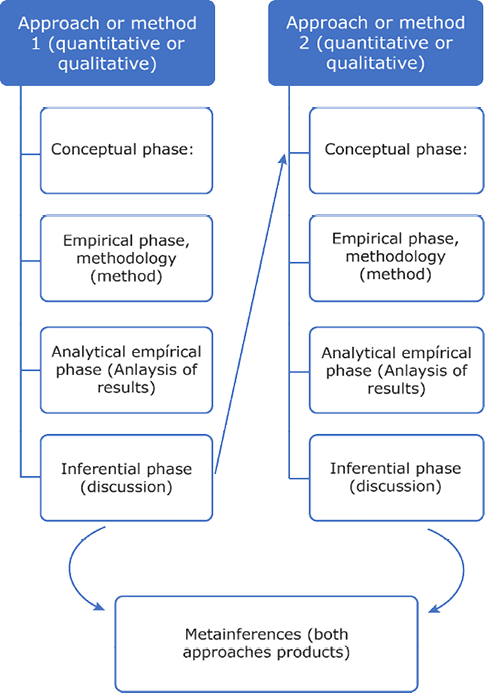
Note: The image illustrates the steps involved in conducting sequential research. Adapted from Hernández and Mendoza (2018).
Data collection techniques and instruments
Quantitative technique
- Instrument: Questionnaire, taken from Workbook 1, Language Communication Skills: Reading – Workbook 1, Saber 7th Grade (Instituto Colombiano para la Evaluación de la Educación [Icfes] y el Ministerio de Educación Nacional [MEN], 2021).
- Objective: To identify which aspects of the literal level of reading comprehension students find most difficult
- Timing: Administered in two phases: an initial phase (diagnostic) and a final phase (assessment of progress following the intervention).
Qualitative technique
- Instrument: Documental review guide.
- Objective: Select and recommend appropriate stories as a teaching strategy to enhance literal reading comprehension.
- Procedure: Review, analysis, and selection of narrative texts appropriate for the participating group of students.
Population and sample
The study population consisted of seventh-grade students at the Institución Educativa San José in Curumaní. The sample comprised 30 students enrolled in class 7-02, who were selected intentionally because they exhibited the identified problem.
Materials and resources
- Saber 7° Workbook (Evaluar para Avanzar).
- Selection of printed and digital narrative stories.
- Documental review guide.
- Technological resources (computer, video beam, word processor).
Procedure
- Diagnostic phase: Initial administration of the questionnaire to identify difficulties with literal comprehension.
- Qualitative phase: Literature review and selection of stories that address the identified needs.
- Intervention phase: Implementation of a story-based teaching strategy.
- Verification phase: administration of the final questionnaire to compare results and measure progress.
A descriptive analysis was conducted, focusing on the use of relative frequencies to examine both the independent and dependent variables. According to Hernández and Mendoza (2018), this type of analysis involves counting the number of cases in each category of the variables in order to identify relevant trends and patterns. It should be noted that the results of all columns in the data matrix are not presented, but only those corresponding to unidimensional variables that are significant for the research objectives. Subsequently, the findings obtained in this quantitative phase served as a starting point for the qualitative analysis, in which, through literature review and the use of stories, the aim was to strengthen the literal level of reading comprehension identified as critical among the students.
Results
The purpose of this section is to assess the reading comprehension levels of the students in grade 7-02 at the Institución Educativa San José in Curumaní. To this end, a questionnaire was administered based on the text Two Lights in Love and on questions designed to evaluate reading comprehension levels according to the categories of literal, inferential, and critical comprehension. The results highlighted the students’ current status in this area.
By administering a structured questionnaire consisting of five single-answer multiple-choice questions, the students’ ability to identify explicit information in the text, make inferences based on the content, and form critical judgments about the reading was assessed; the results were analyzed based on the reading comprehension levels defined by Gordillo and Flórez (2009):
- Literal level: Recognition of explicit information in the text.
- Inferential level: Interpretation of implicit information and establishment of relationships between ideas.
- Critical level: Formation of evaluative judgments and argumentation.
The results were grouped into three categories based on the students’ performance at each level.
Figure 2 shows the results of the questionnaire administered to the 30 students in the sample, which revealed that 80 % of the students are at the literal level; this percentage indicates that most students can identify explicit information in the text but have difficulty making inferences and forming critical judgments; 15 % reach the inferential level; these students can deduce information from the text and establish relationships between ideas, albeit with some limitations; only 5 % reach the critical level; these students are capable of making reasoned judgments and opinions about the text’s content, though in very small numbers.
Figure 2
Preliminary results on reading comprehension (RC)
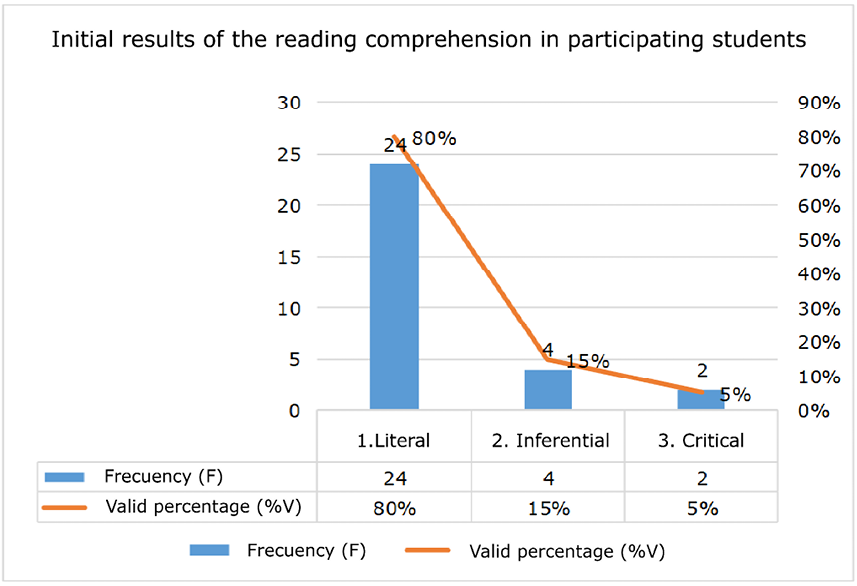
Note. This figure shows the students’ initial RC results.
These results show that most students are at the first level of reading comprehension; that is, they can identify explicit information but have difficulty interpreting the text beyond its literal meaning. Furthermore, students demonstrate limited development in reading comprehension. The predominance of the literal level demonstrates that, while they can recognize specific elements within the text, they have difficulty delving deeper into the meaning, making inferences, and establishing connections between the reading and their prior knowledge.
It is worth noting that these results may be related to various factors, such as a lack of teaching strategies that foster critical and reflective thinking, limited practice in reading literary texts that challenge their interpretive skills, and a lack of reading habits, which limits their cognitive development in text comprehension.
To improve reading comprehension, literary stories were used to address literal, inferential, and critical comprehension. This was carried out in planned sessions where students could engage with the texts and participate in collaborative activities.
Activity 1: Reconstruction of the story
- Preparation and expectations: The students in grade 7-02, were introduced to the theme of the selected story; to this end, the purpose of the activity was explained, and the participants’ interest and expectations were gauged through questions related to the story’s plot.
- Development of the activity: During the reconstruction of Horacio Quiroga’s short story, The Feather Pillow, the students worked in teams to organize the fragments and analyze their sequence. In the activity involving inferential questions, they initially struggled to formulate analytical questions but improved with the teacher’s support. When creating alternative endings, they demonstrated creativity and the ability to defend their versions with reasoning.
For this activity, students were given jumbled fragments of a folk tale; they were then tasked with organizing the story into a coherent narrative: introduction, climax, and conclusion. Throughout the activity, students engaged in group discussions to justify their choices. As a result, the students demonstrated an ability to recognize the narrative structure of the story and, consequently, improved their literal comprehension.
Figure 3
Students working in groups to reconstruct the story piece by piece
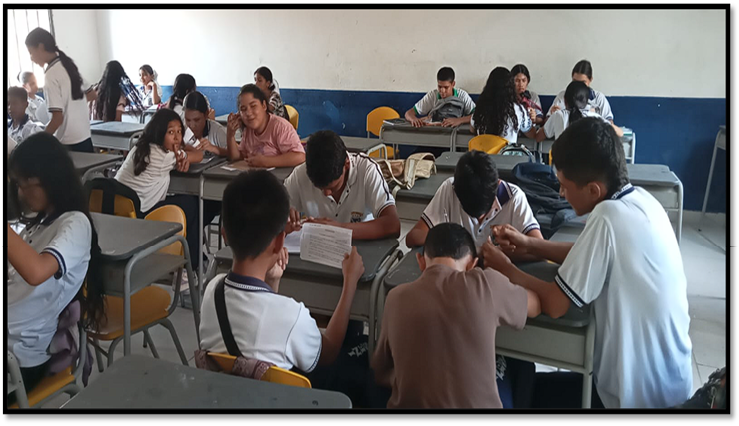
Note. Students reconstructed the story piece by piece.
Figure 4
Activity 1: Reconstruction of the story
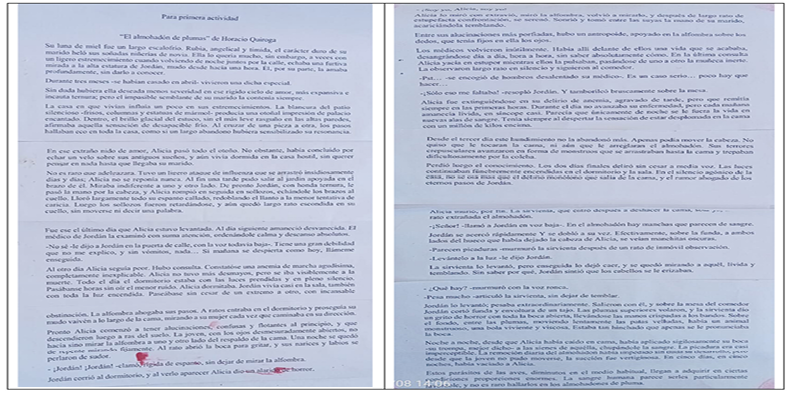
Note. Students reconstructed the story piece by piece.
Activity 2: Circle of inferential questions
First, a short story was selected and read aloud in class; then, the students developed inferential questions about the text. This questioning activity allowed the students to develop their analytical and critical thinking skills based on the story, The dead man. The main results are presented below, organized according to the questions asked and the answers provided by the students.
- Alternatives to the story’s ending: Students reflected on how the story might have changed if the protagonist had acted differently; some suggested that if the man had climbed over the fence more carefully, he would not have been injured or killed, which would have allowed him to continue his life and work as usual; they also noted that if the fence had not been in poor condition, the accident could have been prevented.
- Impact of the death and fatigue on the character: Another line of analysis addressed the importance of rest; some students considered that, if the man had not rested, he likely would not have had the opportunity to reflect on his life or notice details in his surroundings. On the other hand, if he had continued working without stopping, his life would have proceeded without significant changes, maintaining his work and family routine.
- Reflection and death and its inevitability: some responses demonstrated a deeper interpretation of the story’s meaning; it was suggested that, had the man not died, he might have continued his life with his family and completed his daily tasks. Furthermore, the importance of the character’s process of reflection in his final moments was highlighted, as it was considered fundamental to his understanding of reality and his fate.
- The importance of introspection: the importance of reflection in the story was emphasized; students noted that taking the time to think allowed the character to become aware of his life and surroundings before he died; this led to a discussion about the role of introspection in everyday life and how decisions can influence the future.
Figure 5
Activity 2: Circle of inferential questions
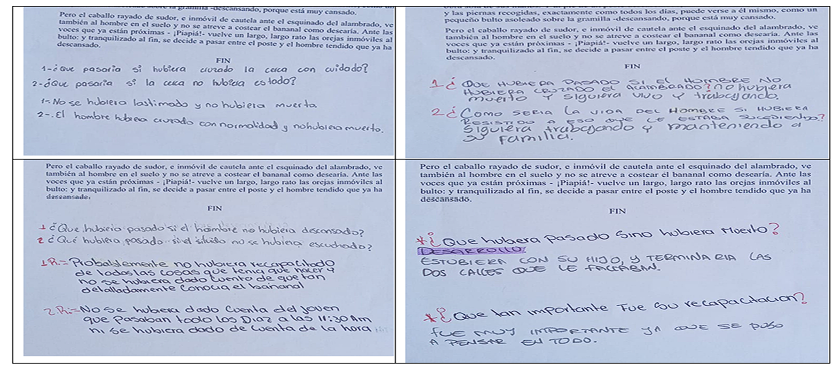
Note. Questions and answers prepared by each working group.
It is worth noting that the activity achieved its goal: to foster inferential and critical thinking among the students. The students’ responses demonstrated a deep understanding of the story, as they were able to explore various possibilities and consequences of the events described; furthermore, the questions posed by the participating students sparked a fruitful discussion on topics such as death, daily routines, and the importance of reflection in life.
Activity 3: Creating an alternative ending
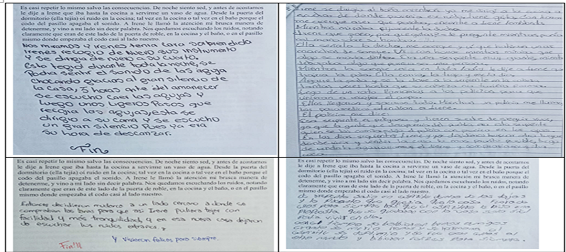
This activity was carried out as follows: First, the students read Julio Cortázar’s short story House Taken Over but were instructed to stop reading before the end so that they would have the opportunity to imagine alternative endings and to ensure they were not familiar with the ending proposed by the author. Second, the students organized into groups to write alternative endings that maintained the tone and atmosphere of Cortázar’s story; to do this, they formulated questions focused on the students’ feelings regarding the story’s ending.
The groups worked on their chosen ending and presented their ideas to the rest of the class. Thus, some groups maintained the mystery until the end and argued that the protagonists tried unsuccessfully to reclaim the house or that the invasion continued until no trace of the house remained. Other groups attempted to offer psychological explanations, suggesting that the occupation was a projection of the characters’ inner fears or a representation of time and loneliness. Still other groups proposed an unexpected twist and introduced a major shift: the protagonists decided to confront the unknown, which, in turn, revealed that the spirit «had been a human».
After the presentation, all the ideas were discussed with the students, and they were asked if they had a favorite version and why. Finally, a discussion was held with the students, and they were asked to provide examples of stories that could be interpreted in different ways. All the endings presented by the students were better than the mental interpretation of Cortázar’s story; this highlighted the importance of creativity and imagination in literature, as well as in plot construction.
Reflections and emotions
The students’ participation was marked by their enthusiasm, especially when creating alternative endings. Some students expressed uncertainty at the start of the activity, but as it progressed, they gained confidence in their abilities.
Thus, the methodology based on the use of literary stories proved effective in capturing students’ interest, and the combination of individual and group activities fostered collaborative learning. A strength observed was the increase in literal comprehension and critical interpretation of the texts; a weakness identified was the need to strengthen the formulation of inferential questions, which requires additional practice.
It is worth noting that the implementation of literary stories in teaching activities reinforced the development of reading comprehension at its various levels; these strategies allowed for improved analysis and interpretation of texts; they also fostered collaborative work and written expression.
The evaluation of the use of literary stories as a teaching strategy determined the impact on the development of students’ reading comprehension; to this end, progress in literal, inferential, and critical comprehension levels was analyzed following the implementation of activities based on literary stories.
Figure 6
Activity 3: Creating an alternative ending
Comparison of reading comprehension test results
After administering the test before and after the intervention, an increase in the number of correct answers was observed across all comprehension levels (see Table 1).
Table 1
Comparison of reading comprehension test results
|
Levels of reading comprehension |
Initial Valid percentage(%V) |
Final valid percentage (%V) |
|
Literal |
80 % |
35 % |
|
Inferential |
15 % |
45 % |
|
Crítical |
5 % |
20 % |
Note. Comparison of the initial survey and the final survey.
Table 1 shows a comparison of the results from the questionnaire administered at the beginning and at the end. This comparison demonstrates that literal comprehension increased by 35 % in the identification of explicit information in the text; inferential comprehension improved by 30 % in the ability to interpret implicit information; and critical comprehension showed a 20 % increase in the formulation of reasoned judgments about the text.
Classroom observations
Initially, many students had difficulty expressing ideas about the texts, but as the activities progressed, their verbal and argumentative fluency improved
Analysis of written work
The alternative endings created by the students showed greater narrative coherence and creativity compared to previous exercises; in the inferential responses, a better structuring of analytical thinking was observed.
Discussion
The discussion of this study’s results is based on an analysis of each of the specific objectives. In this regard, the findings are compared with the existing research literature and the theoretical and conceptual foundations, which allows us to determine the impact of using literary stories on the reading comprehension in students of the 7-02 grade at the Institución Educativa San José in Curumaní.
Regarding the first objective, aimed to identify the level of reading comprehension, the results indicated that 80 % of the students are at the literal comprehension level; 15 % at the inferential level; and 5 % at the critical level. These findings are consistent with the studies by Solé (1992), who notes that initial levels of reading comprehension are typically dominated by the recognition of explicit information, while the development of inferences and critical judgments requires specific teaching strategies. For their part, Gordillo and Flórez (2009) assert that reading comprehension must be approached progressively, which justifies the need to implement appropriate teaching strategies. Along the same lines, Jensen et al. (2024) argue that comprehension also depends on the interaction between text format, textual processing, and student attitude, which reinforces the importance of providing educational support from the early stages through the most advanced levels.
For the second objective, aimed at designing activities using literary stories to promote reading comprehension, the activities developed enabled students to draw their own inferences; these included story reconstruction, the circle of inferential questions, and writing alternative endings, based on the cognitive theory of Ausubel and Novak (1983). According to this model, for learning to occur, new knowledge must be integrated into the student’s prior cognitive structure. Regarding the workshop’s results, it was observed that these types of activities were effective in improving reading skills, as confirmed by Núñez et al. (2021), who demonstrated that narrative strategies can enhance comprehension in elementary school students.
About the third objective, intended to the implementation of the proposed activities, the participants’ performance and motivation improved significantly. In this regard, Rocha and Rocha (2023) note that there are models indicating that when stories are contextualized to students’ experiences, the level of participation increases. Sembiring (2022) adds that short stories can be effective in teaching vocabulary and create a more enjoyable environment for the acquisition of reading skills, which is consistent with the results of the current study.
For the fourth objective, the evaluation of the effectiveness of the activities presented showed that stories are a valuable resource for strengthening reading comprehension. According to Syafii (2021), strategies such as story mapping help readers organize information and understand how ideas form a logical sequence. Consequently, the results of the current study align with existing theory and support the proposal that fiction stories can be used at early reading levels to improve reading comprehension skills.
Conclusions
The use of literacy stories as a teaching strategy is effective in strengthening reading comprehension among lower-middle school students. Comprehension tests showing that a higher percentage of students remained at the literal level confirm the need for instructional interventions that promote interpretation at the inferential and critical levels. Furthermore, the activities designed and implemented in this study demonstrated that they were effective in motivating students, supporting meaningful learning, and fostering the construction of inferences.
The findings are consistent with previous research highlighting narratives as valuable resources for teaching; furthermore, they indicate that context, format, and interaction influence interpretation. Consequently, it can be affirmed that stories facilitate literal and inferential comprehension and, in turn, foster critical and reflective thinking.
This study provides a methodological framework that can be replicated with other groups and in other school settings. Therefore, it is recommended to integrate literacy stories as cross-curricular or subject-specific resources in any area of the curriculum. Furthermore, emerging research can broaden its scope to include diverse groups at this educational level, incorporate other narrative genres, and, given the prevalence of ICT, integrate technological tools designed to enhance readers’ engagement with literary and audiovisual narrative elements.
Conflict of interest
The authors declare that they have no conflicts of interest regarding the publication of this article. They further undertake to immediately notify the Ethics Committee of the Universidad Mariana of any circumstances that could constitute a conflict of interest and affect the conduct of the research.
Ethical responsibilities
Before beginning the study, informed consent was obtained from the parents, and the confidentiality of the students’ data was ensured. The project focused on developing the reading comprehension skills of seventh-grade students at the Institución Educativa San José in Curumaní through the use of literacy stories as a teaching strategy. Therefore, during the study, any physical, emotional, or psychological harm was avoided, and inclusion without discrimination was ensured.
Sources of financing
The authors declare that they received no financial support for the conduct of this study.
References
Algor Education. (s.f.). Proceso y subprocesos de la lectura según Isabel Solé [Process and subprocesses of reading according to Isabel Solé] [Página web]. https://cards.algoreducation.com/es/content/FByqFiSu/estrategias-comprension-lectora
Ausubel, D; Novak, J. D. y Hanesian, H. (1983). Psicología educativa. Un punto de vista cognoscitivo [Educational psichology: a cognitive perspective] (2.a ed.). Editorial Trillas.
Brierley, J. (2017). El paradigma pragmático en la investigación [The pragmatic paradigm in research]. Revista de Investigación Interdisciplinaria, 42(2), 89-104 .
Carvajal, D. M. y Niño, D. L. (2021). Láminas y cuentos cortos digitales mediante una app para fortalecer la comprensión lectora en estudiantes de grado segundo [Digital flashcards and short stories via an app to improve reading comprehension among second-grade students] [Tesis de maestría, Universidad de Santander]. Repositorio Digital UDES. https://repositorio.udes.edu.co/entities/publication/1aec72e9-fa02-4082-b839-ba1f56f8d86a
Caviedes, J. F. (2013). La lectura en Paulo Freire y la competencia lectora de PISA. [Reading in Paulo Freire and PISA Reading Literacy] Educacao, 36(2), 223-231. https://www.redalyc.org/pdf/848/84827901010.pdf
Constantino, R. (2011). El cuento [Literacy stories] [Blog]. Blogspot. http://elcuentoenprimaria.blogspot.com/p/tipos-de-cuentos.html
Creswell, J. W., & Plano Clark, V. L. (2007). Designing and conducting mixed methods research. SAGE.
Gordillo Alfonso, A. y Flórez, M. del P. (2009). Los niveles de comprensión lectora: hacia una enunciación investigativa y reflexiva para mejorar la comprensión lectora en estudiantes universitarios [Reading comprehension levels: toward a research-based and reflective approach to improving reading comprehension among college students]. Actualidades Pedagógicas, (53), 95-107. https://ap.lasalle.edu.co/article/view/452
Hernández, R. y Mendoza, C. (2018). Metodología de la investigación. Las rutas cuantitativa, cualitativa y mixta [Research methodology. Quantitative, qualitative and mixed approaches]. McGraw Hill Eucation.
Hernández, R., Fernández, C. y Baptista, P. (2014). Metodología de la investigación [Research methodology] (6.a ed.). McGraw Hill Education.
Instituto Colombiano para la Evaluación de la Educación (Icfes), Ministerio de Educación Nacional (MEN). (2021). Competencias Comunicativas en Lenguaje: Lectura - Cuadernillo 1 Saber 7.° [Language Communication: Reading - Workbook 1, Saber 7]. https://www.gimnasiosantorey.edu.co/gsr/wp-content/uploads/2022/04/Cuadernillo-Competencias-Comunicativas-en-Lenguaje-7%C2%BA.pdf
Jensen, R. E., Roe, A., & Blikstad-Balas, M. (2024). The smell of paper or the shine of a screen? Students’ reading comprehension, text processing, and attitudes when reading on paper and screen. Computers & Education, 219, 105107. https://doi.org/10.1016/j.compedu.2024.105107
Manyil, M. M, & Safiyanu, S. (2024). Effects of Instruction in Short Stories on Junior Secondary Students’ Reading Comprehension Achievement in Jos South LGA, Plateau State Nigeria. Greener Journal of Educational Research, 14(1), 158-185. https://doi.org/10.15580/gjer.2024.1.120824191
Núñez-Naranjo, A. F., Guevara, A. W. P., Pérez, V. y Yancha, K. R. Y. (2021). El cuento: estrategia didáctica para la comprensión lectora [Literacy story: a teaching strategy for reading comprehension]. Conciencia Digital, 4(1.2), 119-130. https://doi.org/10.33262/concienciadigital.v4i1.2.1583
Özkara, A. B., Çiftçi, M., & Özkan, M. (2025). The effect of story map use on primary school students’ reading comprehension. International Electronic Journal of Elementary Education, 17(4), 579-591. https://doi.org/10.26822/iejee.2025.401
Rocha Peláez, G. y Rocha Peláez, M. (2023). El cuento como estrategia pedagógica para el desarrollo de la comprensión lectora de los estudiantes del municipio de El Banco Magdalena–Colombia [The Story as a Pedagogical Strategy for Developing Reading Comprehension Among Students in the Municipality of El Banco, Magdalena, Colombia] [Tesis de maestría, Corporación Universidad de la Costa]. Repositorio Institucional CUC. https://repositorio.cuc.edu.co/handle/11323/10668
Sembiring, M. (2022). Students’ Perception on Using Short Story to Develop Vocabulary at SMP Regina Caeli Cileungsi. JET Journal of English Teaching, 8(1), 145-155. https://doi.org/10.33541/jet.v8i1.3775
Solé, I. (1992). Estrategias de comprensión de la lectura [Strategies for reading comprehension]. http://www.lecturayvida.fahce.unlp.edu.ar/numeros/a17n4/17_04_Sole.pdf
Sugandi, Y. J., Juniardi, Y., & Rahmawati, D. (2022). The effectiveness of using story map technique on students’ reading comprehension of narrative texts. Lingua Scientia, 29(1), 15–27. https://www.researchgate.net/publication/368425405
Syafii, M. (2021). The Implementation of the Story Mapping Strategy to Enhance Students’ Reading Comprehension. Celtic: A Journal of Culture, English Language Teaching, Literature and Linguistics, 8(1), 1-21. https://ejournal.umm.ac.id/index.php/celtic/article/view/16161
Syarief, I., Apsari, Y., & Dewi, A. (2020). The use of book story in teaching reading comprehension. Professional Journal of English Education, 3(2), 276-282. https://doi.org/10.22460/project.v3i2.p276-282
Tobón Tobón, S., Pimienta Prieto, J. H. y García Fraile, J. A. (2010). Secuencias didácticas: aprendizaje y evaluación de competencias [Instructional sequences: learning and assessing competencies]. Pearson Educación.
Contribution
Xilena Paola Montes Machado: Principal investigator. Statistical data analysis, drafting the materials and methods section, and compiling the results.
Heidin Arce Bolaño: Principal investigator. Analysis and interpretation of results; drafting of the introduction, methods, and discussion sections.
Yerine Zuley Dajil Turizo: Principal investigator. Statistical data analysis, review of writing and conclusions.
All authors contributed to the preparation of the manuscript, reviewed it, and approved it.
Statement on the use of artificial intelligence
In preparing this article, the authors used ChatGPT 4 to translate the abstract and keywords into English and Portuguese. After using this tool, the authors carefully reviewed and revised the content. Therefore, they assume full responsibility for the publication.
Masters’ student in Pedagogy. Email: xipamontes123@umariana.edu.co

2 Masters’ student in Pedagogy, Universidad Mariana, Valledupar, Colombia. Email: heiarceb124@umariana.edu.co
3 Research professor, Universidad Popular del Cesar; member of the research group DIDACINNOVACIONCN, Valledupar, Cesar, Colombia. Email: yerinezu.dajil@umariana.edu.co