Conditions of access to the Unicervantes Social Work program for students belonging to ethnic groups, 2019-2023
Paola Marcela Jurado Erazo1
Daniela María Rodríguez Torres2
To reference this article / Cómo citar este artículo / Para citar este artigo: Jurado-Erazo, P. M., & Rodríguez-Torres, D. M. (2025). Conditions of access to the Unicervantes Social Work program for students belonging to ethnic groups, 2019-2023. Revista UNIMAR, 43(1), 13-26. https://doi.org/10.31948/ru.v43i2.4646
Reception date: January 21, 2025
Review date: March 6, 2025
Approval date: May 22, 2025
Abstract
This article presents relevant information on access to the Social Work program at Fundación Universitaria Cervantes San Agustín in Mocoa, Putumayo, for students belonging to different ethnic groups from 2019 to 2023. The general aim was to understand these conditions. To this end, three specific objectives were established: identifying population characteristics, recognizing the main challenges of accessing higher education, and categorizing the reasons these students chose the social work program. The research employed a quantitative, non-experimental, cross-sectional approach. Information was collected via a digital survey administered to a stratified sample of 29 students. The survey considered variables such as sociodemographic data, economic and cultural barriers, and educational motivations. The results showed that most students from ethnic groups at the university are women aged 22 to 32 who live in Mocoa. Additionally, financial support programs were identified, though few students benefit from them. Economic and social barriers are related to high tuition costs, cultural clashes, stereotypes, and stigmatization. Conversely, students’ motivations stem from a vocation of service and the influence of their family and community. Based on these results, improving access to financial aid for students and developing strategies that address the social and cultural barriers faced by ethnic groups are essential.
Keywords: higher education; ethnic groups; social work; motivation; motivation
Condiciones de acceso al programa de Trabajo Social de Unicervantes para estudiantes pertenecientes a grupos étnicos, 2019-2023
Resumen
En este artículo se presenta información relevante sobre las condiciones de acceso al programa de Trabajo Social de la Fundación Universitaria Cervantes San Agustín, sede Mocoa, Putumayo, para estudiantes pertenecientes a diferentes grupos étnicos, en el periodo comprendido entre 2019 y 2023. Por lo tanto, el objetivo general se centró en conocer dichas condiciones; para ello, se establecieron tres objetivos específicos orientados a identificar características poblacionales, reconocer los principales desafíos de acceso a la educación superior y categorizar los motivos que llevaron a estos estudiantes a elegir el programa de Trabajo Social. La investigación adoptó un enfoque cuantitativo con un diseño no experimental y de tipo transversal. La información se recolectó mediante una encuesta digital aplicada a una muestra estratificada de 29 estudiantes, considerando variables como datos sociodemográficos, barreras económicas y culturales, y motivaciones educativas. Los resultados señalaron que los estudiantes pertenecientes a grupos étnicos de la Universidad son, en su mayoría, mujeres entre los 22 y 32 años que residen en Mocoa. Asimismo, se identificó la existencia de programas de apoyo financiero, aunque pocos estudiantes se benefician de ellos. Las barreras económicas y sociales se relacionan con los altos costos de la matrícula, los choques culturales, los estereotipos y la estigmatización. Por otro lado, las motivaciones de los estudiantes se centran en la vocación de servicio y en la influencia del entorno familiar y comunitario. A partir de estos resultados, es fundamental mejorar el acceso a ayudas financieras para los estudiantes y desarrollar estrategias que aborden las barreras sociales y culturales que enfrentan quienes pertenecen a grupos étnicos.
Palabras clave: educación superior; grupos étnicos; trabajo social; motivación
Condições de acesso ao programa de Serviço Social da Unicervantes para estudantes pertencentes a grupos étnicos, 2019-2023
Resumo
Este artigo apresenta informações relevantes sobre o acesso ao programa de Serviço Social da Fundación Universitaria Cervantes San Agustín em Mocoa, Putumayo, para alunos pertencentes a diferentes grupos étnicos de 2019 a 2023. Portanto, o objetivo geral era conhecer essas condições. Para isso, foram estabelecidos três objetivos específicos: identificar as características da população, reconhecer os principais desafios de acesso ao ensino superior e categorizar os motivos pelos quais esses alunos escolheram o programa de serviço social. A pesquisa empregou uma abordagem quantitativa, não experimental e de corte transversal. As informações foram coletadas por meio de uma pesquisa digital administrada a uma amostra estratificada de 29 alunos. A pesquisa considerou variáveis como dados sociodemográficos, barreiras econômicas e culturais e motivações educacionais. Os resultados indicaram que a maioria dos alunos pertencentes a grupos étnicos da universidade são mulheres entre 22 e 32 anos que moram em Mocoa. Além disso, foram identificados programas de apoio financeiro, embora poucos alunos se beneficiem deles. As barreiras econômicas e sociais estão relacionadas aos altos custos das mensalidades, choques culturais, estereótipos e estigmatização. Por outro lado, as motivações dos alunos decorrem de uma vocação de serviço e da influência de sua família e comunidade. Com base nesses resultados, é essencial melhorar o acesso à ajuda financeira para os alunos e desenvolver estratégias que abordem as barreiras sociais e culturais enfrentadas pelos grupos étnicos.
Palavras-chave: ensino superior; grupos étnicos; trabalho social; motivação
Introduction
This document emphasizes the importance of understanding the barriers and opportunities that students from ethnic populations face when accessing higher education, particularly in regions that have lagged for decades, such as Putumayo. Thus, the following research question is posed: What are the access conditions for the Social Work program at Fundación Universitaria Cervantes San Agustín (Unicervantes) for students from ethnic minority groups in Putumayo between 2019 and the first academic period of 2023?
The answer emerged under the following general objective: To understand the access conditions for the Social Work program at the Unicervantes campus in Mocoa for students belonging to different ethnic groups in the Putumayo department. The specific objectives were, first, to identify the demographic characteristics of the students; second, to understand the main challenges they faced in accessing education when they began their academic studies; and third, to categorize the reasons that led them to pursue a career in social work.
Therefore, a thorough review was conducted of various research studies exploring ethnic groups’ access to higher education and the role of social work in intercultural settings. On an international level, the study by Sanhueza et al. (2014) is particularly notable. The authors, as educators, emphasized the importance of recognizing and applying knowledge from the Mapuche perspective to create culturally relevant intervention strategies and enhance the identity of Mapuche students within the university environment. They conclude that incorporating indigenous perspectives in education must go beyond symbolic acknowledgment, advocating for structural changes that foster respect and genuine visibility for these cultures in educational settings and processes.
Given its intercultural approach, it is pertinent to consider this background, which allows us to understand how ethnic groups should be recognized and valued within academia. This serves as the basis for analyzing the conditions of access to higher education from an interculturally sensitive and respectful perspective.
At the national level, Cano et al. (2016) conducted a study to characterize the intercultural competence of university students enrolled in virtual programs. The authors employed a mixed approach, incorporating quantitative studies to enable a descriptive and exploratory survey of a selected sample of 68 students enrolled in online courses. Additionally, they extracted qualitative data from bibliographic records, which significantly complemented the content analysis. This research integrates concepts of diversity and interculturality in higher education. Its results encourage reflection on respecting and recognizing the country’s history and culture, where understanding different scenarios contributes to multicultural inclusion from the perspective of university students.
Cano et al. (2016) emphasize that, from the start of higher education, it is essential to explicitly include content that promotes an intercultural perspective among future professionals. This background contributes to reflections on inclusive higher education, considering the particularities of students belonging to the diverse ethnic groups of Putumayo. It also highlights the conditions that can facilitate or limit their access to academic programs, such as social work.
This background offers insight from an ethnic perspective and guides the methods and approaches based on various data collection methods and techniques, which are applied to social work students at the Unicervantes, to determine sociodemographic data, risk factors, and motivation for accessing higher education.
The participating population consists of young people from indigenous and Afro-descendant ethnic groups in the Putumayo department who studied Social Work at the Mocoa campus of Unicervantes from 2019 to 2023. A quantitative approach was adopted due to its effectiveness in measuring variables and generating generalizable results, since it «uses data collection to test hypotheses based on numerical measurement and statistical analysis to establish patterns of behavior and test theories» (Hernández et al., 2014, p. 2). A descriptive, cross-sectional design was used, involving a survey of 29 students in the program, selected through stratified probability sampling, «in which the population is divided into segments and a sample is selected for each segment» (Hernández et al., 2014, p. 181). The strata considered were ethnic group (Indigenous and Afro-descendants) and academic semester (from the first semester to the last semester taken between 2019 and 2023). This type of sampling is important because it ensures adequate representation of the various ethnic groups within the student population, which optimizes the validity of the results. The study aims to contribute to existing theories and improve educational policies and programs for ethnic communities in Colombia.
Methodology
Approach
We adopted a quantitative approach because it allowed us to understand the conditions of access to the Social Work program at Unicervantes. This approach allowed us to describe trends and relationships between variables, enabling us to draw inferences about the study population. According to Dornyei (as cited in Rodas & Santillán, 2019), the quantitative approach «involves data collection procedures that mainly yield numerical information, which is then analyzed using statistical methods» (p. 173). This allowed us to quantify the necessary variables for analyzing the results, such as sociodemographic data, challenges in accessing higher education, and motivations for studying social work.
Design
The methodological design of the research was non-experimental, descriptive, and cross-sectional. In this type of design, as stated by Dzul (2018), data is collected at a single point in time, in its natural context, to describe variables and analyze their incidence and interrelationship. In this way, it was possible to observe the reality of students from ethnic groups in the Putumayo department about their experience accessing the Social Work program at Unicervantes without manipulating the variables.
Population and sample
The population consisted of Indigenous and Afro-descendant students from the Putumayo department who studied Social Work at the Fundación Universitaria Cervantes San Agustín Mocoa campus between 2019 and 2023, represented by a sample selected through stratified sampling to ensure adequate representation of the defined study strata.
Quantitative research applied to the social field assumes a conception of reality that is constant and adaptable over time. On the other hand, it contributes to establishing an objective position for the researcher, demonstrating cause-and-effect relationships between variables, guiding their activity from the specific to the general around the problem statement. (Babativa, 2017, p. 14)
The strata considered were ethnic group (Indigenous and Afro-descendant) and academic semester (from the first to the last taken between 2019 and 2023). This method ensured that all relevant perspectives were included and that the sample was representative of the population. The final sample consisted of 29 students who participated in the data collection process.
Data collection tool
A digital survey sent via Google Forms was used to collect data, which facilitated the organization of information for subsequent interpretation and analysis. The questions included in the survey were designed to collect data in three key areas that addressed the specific objectives of the research: sociodemographic data, access to higher education, and motivations for studying social work.
For the first specific objective, the ‘Sociodemographic data’ variable was defined, and questions were formulated to obtain information about the semester, age, geographical location, self-recognition, and gender of the students. For the second specific objective, the variable ‘Access to higher education’ was used, with eight questions focusing on economic factors, adaptation to new media, cultural barriers, social barriers, and low quality of secondary education. Finally, for the third specific objective, the variable ‘Motivations’ was adopted to investigate, through eight questions, personal improvement, family and community aspirations, independence, economic growth, and support for the ethnic community.
The collected data were analyzed statistically. Frequencies and percentages were calculated to describe the characteristics of the sample and visually represent the gathered information.
The research methodology was meticulously designed to ensure the collection of accurate and objective data that would provide insight into the conditions of access to the Social Work program for students belonging to ethnic groups in Putumayo. Using a quantitative approach with a cross-sectional, non-experimental design and stratified sampling yielded relevant and reliable results, which are described below.
Results
The information gathered using data collection techniques was analyzed with the specific objectives set. To address the first objective, the demographic characteristics of 29 Unicervantes students belonging to ethnic groups in the Putumayo department were identified. Information was gathered on their age range, semester of study, geographical location, gender, and self-identification as indigenous or Afro-Colombian (see Table 1).
Table 1
Population characteristics of the sample
|
General characteristics of the population |
|||
|
Variable |
Data |
Frequency |
Percentage |
|
Age ranges |
15-21 |
8 |
27,5% |
|
22-32 |
16 |
55,2% |
|
|
32-42 |
4 |
13,7% |
|
|
53 o + |
1 |
3,4% |
|
|
Semester |
I |
8 |
27,5% |
|
II |
0 |
0% |
|
|
III |
6 |
20,6% |
|
|
IV |
2 |
6,9% |
|
|
V |
2 |
6,9% |
|
|
VI |
6 |
20,6% |
|
|
VII |
0 |
0% |
|
|
VIII |
5 |
17,2% |
|
|
Geographical location |
Villagarzón |
3 |
23,2% |
|
Mocoa |
24 |
37,3% |
|
|
Self-recognition |
Indigenous |
22 |
75,9% |
|
Afro-descendant |
7 |
24,1% |
|
|
Gender |
Male |
0 |
0% |
|
Female |
29 |
100% |
|
According to the recorded data, various aspects can be identified. In terms of age, the majority of students are between 22 and 32 years old (55.2%), followed by those between 15 and 21 years old (27.5%). These percentages suggest that many students are at a pivotal point in their lives when higher education can greatly impact their personal growth. Similarly, although they are a small percentage (13.7%), the presence of students over 32 years of age shows that the social work program attracts adults seeking to advance their education.
The largest number of students (27.5%) is enrolled in the first semester. Notably, no students are enrolled in the second semester, raising questions about possible student retention problems that could justify further research. Similarly, the distribution of students across the other semesters indicates continuous progression in the social work program. However, there are also fluctuations, especially in the seventh semester, where there are no students.
Geographically, the highest concentration of students resides in the municipality of Mocoa (37.3%), which may justify the location of the Unicervantes campus there. However, students from Villagarzón who attend this campus demonstrate the importance of higher education in the Putumayo region.
The results of the ethnic self-identification survey show that 75.9% of students identify as Indigenous, while 24.1% identify as Afro-descendant. These results reinforce the importance of the program for indigenous communities and highlight the need for culturally relevant educational approaches. It also demonstrates the need to prioritize support for Afro-descendants.
Finally, a gender disparity is identified: One hundred percent of the respondents identified as female, suggesting a low enrollment rate of males in the social work program. This raises questions about the barriers that men from ethnic groups in Putumayo face when trying to access this career.
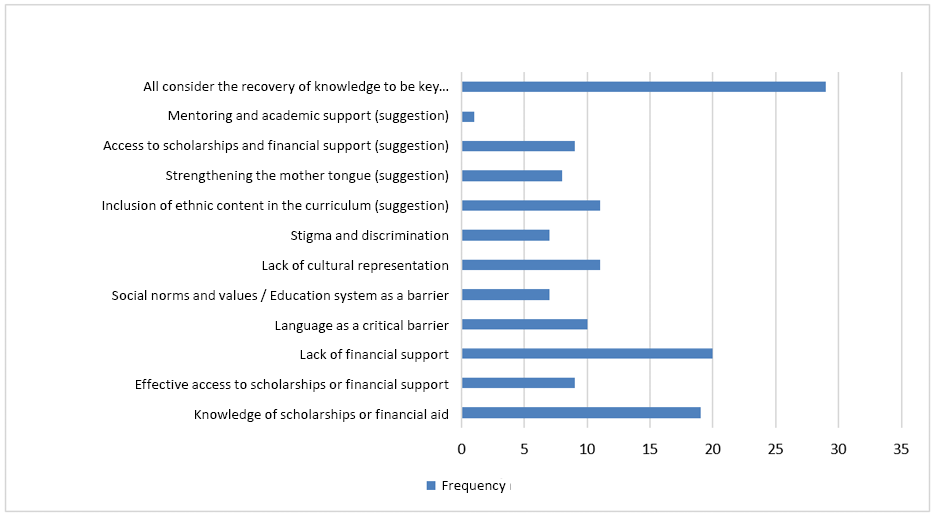
Regarding the second objective, one of the main challenges is economic: although 65.5% of students say they are aware of scholarship and financial support programs, such as the Fondo de Comunidades Negras and the Fondo Álvaro Ulcué Chochué, only 31% benefit from them. The majority —69% of the population— does not receive any financial aid, highlighting a gap between awareness of financial support resources and access to them. Students also identified various specific challenges, including high tuition costs, additional expenses throughout their studies, and difficulty accessing scholarships. Taken together, all of these challenges can be essential to whether students continue or abandon their higher education
Similarly, culture shock is a significant obstacle affecting the adaptation of ethnic students to higher education. The educational system, social norms, values, and language are identified as significant barriers to this process. 34.4% of students report language as a critical barrier, while 24.1% cite social norms and values and the educational system as additional challenges. Culture shock can result in feelings of isolation and difficulty remaining in a higher education environment.
In addition to the challenges already mentioned, students face other challenges in adapting. For example, 37.9% of people consider a lack of cultural representation to be a challenge, and 24.1% consider stigma and discrimination to be a challenge. Discriminatory attitudes and behaviors within institutions remain a major problem that affects not only academic performance but also the emotional and psychological well-being of students. Similarly, stereotypes and social prejudices can limit the educational aspirations of Indigenous and Afro-Colombian students. These students face prejudices such as socioeconomic limitations, the perception of low intellectual capacity, and a lack of ambition or interest in education in the context of higher education. These prejudices affect their self-esteem, motivation, and the expectations and support they receive from their family and community environments.
All respondents agree that developing initiatives to preserve and value the traditional knowledge of their communities would significantly improve their adaptation to higher education institutions (HEIs). To overcome these barriers, students suggested several measures: including ethnic and cultural content and perspectives in the curriculum (37.9%); strengthening the mother tongue (27.5%); providing access to scholarships and financial support (31%); and, to a lesser extent, offering mentoring and academic support (3.4%) (see Figure 1).
Figure 1
Accessing higher education: Challenges for students from ethnic groups
In addition to the above, the quality of secondary education influences access to higher education. Improvements are needed in guidance and access to information, as well as in educational quality. Inadequate preparation for the admission process to HEIs and insufficient development of language skills in the predominant language hinder the transition from secondary to higher education.
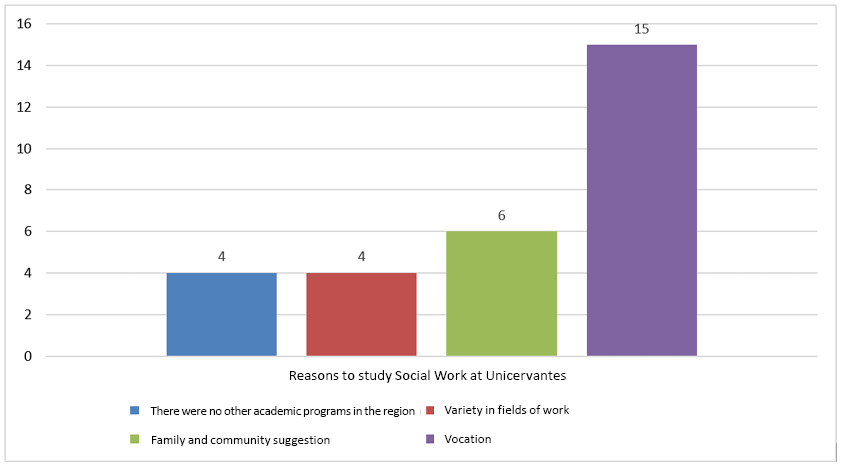
For the third objective, Figure 2 shows the frequency of the different motivations considered by the students.
Figure 2
Frequency of motivations for enrolling in the Social Work program
Note. The maximum frequency was 29.
The results show that the main motivations for studying social work among students from ethnic groups fall into four categories: 51.7% (15 people) indicated that their main motivation is vocation, reflecting their desire to help and work in the social field, in line with the fundamental values of the profession itself. The second most frequent motivation was family and community suggestion, represented by 20.6% (six students), which highlights the importance of family and community support in deciding to pursue a university career. Therefore, culture and community expectations play an important role in their decisions.
Conversely, 13.7% (four people) consider the lack of academic offerings in the region and the variety of fields of work important, respectively. The lack of local academic options highlights a structural deficiency in the municipality of Mocoa, forcing students to choose available careers rather than ones aligned with their interests or skills. Students also perceive social work as offering diverse job opportunities, indicating that they see this career as a path to economic and professional stability.
In terms of personal achievement, 38% of respondents know stories of achievement in their communities. These stories have served as a driving force and inspiration to pursue higher education. These stories include examples of community members who have overcome cultural and social barriers to achieve academic success and community and family leaders who have obtained advanced degrees and contributed significantly to their communities as a result. Similarly, 55.1% of respondents indicated that cultural identity and preservation are fundamental influences on their motivation to pursue higher education. 37.9% highlighted improving the family and community situation, while only one person (3.4%) mentioned family pressure and expectations, along with personal achievement.
The majority of students surveyed, representing 89.6%, believe that having a university degree can lead to independence. They justify this belief by saying that completing a degree will improve their living conditions and allow them to contribute to the community.
Regarding support for ethnic communities, 37.9% of respondents believe that promoting higher education is essential to fostering leadership and citizen participation. Cultural preservation and diversity were important to 31% of respondents, while 20.7% mentioned social and economic development, and 10.4% highlighted reducing social and cultural gaps. These results suggest that higher education is viewed as a means of empowering and advancing ethnic communities.
Finally, from a social work perspective, students firmly believe that they can contribute to their communities by participating in community projects, providing counseling services, designing inclusive programs, and advocating for their communities’ rights and representation. They also emphasize the importance of promoting community development programs in collaboration with community leaders to preserve culture and identify and address the specific challenges faced by ethnic groups.
Discussion
In the context of the research, the conditions of access for students from ethnic groups to the Social Work program at the Fundación Universitaria Cervantes San Agustín are marked by various factors: structural, cultural, economic, and academic, which have led to material and symbolic barriers that permeate educational processes.
First, the university is recognized as a place of higher education and a meeting point for cultures, identities, and student backgrounds. In line with previous studies, Ocoró (2017) points out that «the university is a space where cultural capital is negotiated, ethnic-racial and gender stereotypes are confronted, and family backgrounds are discussed, among other things. It is a place where different groups have the opportunity to influence inequalities» (p. 90). Similarly, students who participated in the survey stated that their ethnic origin sometimes affects how they are included socially and academically in the university environment.
Similarly, Guzmán and Solano (2021) identify among the barriers to participation in higher education «the historical weight of racism, cultural discrimination, and geo-ethnic discrimination» (p. 17), which places students in a position of vulnerability and passive participation that limits the potential of their educational processes.
Although there is widespread knowledge about some scholarship programs and financial support for indigenous and Afro-descendant communities, such as the Pueblos Indígenas Álvaro Ulcué Chocué and the Fondo para Comunidades Negras of the Instituto Colombiano de Crédito Educativo y Estudios Técnicos en el Exterior (ICETEX), the percentage of students who benefit from these programs remains very low. Both grants aim to facilitate and guarantee equal access to higher education for young people from historically disadvantaged communities. However, difficulties accessing information, cumbersome bureaucratic processes, and limited guidance from secondary schools make it challenging to take full advantage of these benefits.
Therefore, it should be noted that students from vulnerable backgrounds, including those from ethnic groups, face economic, social, academic, and educational barriers to accessing university. For this reason, higher education must address not only educational aspects, but also social and cultural inclusion and issues related to the country’s socioeconomic realities (Bartolomé et al., 2021). In addition, tuition and living costs are the main economic challenges. Therefore, the idea that «it is necessary to study school variables associated with the transition to higher education to inform policies that ensure greater equity in young people’s access to higher education» is reinforced (Guerrero, 2013, p. 10). Proper dissemination of information about available benefits and processes for becoming a beneficiary is essential, starting in the final year of secondary education. The low quality of education, lack of guidance, limited access to information, and inadequate preparation at this level negatively impact access to higher education. These issues highlight structural weaknesses in the education system that must be addressed to improve opportunities for students from ethnic groups.
Cultural barriers are also a crucial factor in accessing higher education for students from ethnic communities. These students often have to adapt to an educational system that does not adequately value their cultural and linguistic heritage. This can cause feelings of rootlessness. Regarding this issue, Veliz-Rojas et al. (2019) state: «Educational intervention in intercultural competence must be carried out from a global, inclusive, and transdisciplinary approach» (p. 1). In other words, they propose the need for more flexible curricula that respect the diversity of ethnic groups found in educational settings.
Similarly, the Ministerio de Educación Nacional (MEN, 2024) emphasizes the importance of promoting education that considers «the cultural particularities and reality of our communities» (para. 4). This emphasizes the importance of educational processes with an ethnic focus as strategies for fostering the identity and sense of belonging of Indigenous and Afro-descendant students.
From a social perspective, stereotypes and prejudices, socioeconomic limitations, and perceptions of low intellectual capacity continue to hinder students’ educational aspirations. This is consistent with the results of a study on dropout rates at the Universidad del Valle, where Afro-Colombian and indigenous students who migrated to Cali to pursue their university studies reported feeling discriminated against by their peers: «Afro-Colombian and indigenous students enter university with academic disadvantages, which they were unable to overcome due to the conditions of the university environment» (Meneses, as cited in Ojeda & González, 2012, p. 105).
As Soler-Castillo (2020) mentioned, «it is necessary to become aware of, question, and critically reflect on the role of schools in producing and reproducing stereotypes that generate inequalities» (p. 8). This implies recognizing the existence of prejudice in the school environment and implementing inclusive educational policies and support programs that contribute to the academic success of students belonging to ethnic minorities. Eradicating stereotypes and creating an inclusive educational environment where everyone is welcome are essential for these students to reach their full potential and can contribute significantly to society.
Including ethnic and cultural content and perspectives in the educational curriculum is a highly valued, inclusive measure that highlights the need to enrich the curriculum to promote greater representation and appreciation of cultural identity. In this regard, Rodrigues Manchinery (2008, as cited in Londoño, 2017) «recommends a flexible, less standardized, more intercultural education, where commitments are established between indigenous peoples and universities that allow for the transformation of existing curricula and training proposals so that they become more relevant» (p. 53). Enriching the curriculum benefits ethnic communities by validating and preserving their traditional knowledge and cultural heritage. It also fosters a more inclusive and diverse learning environment for all students, preparing them to thrive in an increasingly globalized and multicultural world, while equipping them with the skills necessary to work and live in diverse societies.
The motivations for studying social work are mainly vocation and family suggestions. These motivations highlight the importance of community and family support in the decision to pursue higher education, which coincides with Sánchez-Martín’s (2020) assertion that «family and social environment are the aspects that carry the most weight in career choice decisions» (p. 44). Perceiving higher education as a path to economic and personal independence underscores the value of university studies in enhancing the quality of life and alleviating poverty in these communities: «HEIs contribute to local, regional, and national development, as well as the personal and professional development of young people. This opens many doors for them, as they acquire new knowledge that enables them to improve their quality of life» (Trochez, 2021, pp. 27-28). In this regard, it is essential to acknowledge the transformative impact of higher education, not only in terms of acquiring knowledge and skills, but also in creating opportunities to break the cycles of poverty and social exclusion.
Finally, students find higher education as a means of strengthening leadership, preserving culture, and reducing social disparities. In the case of social work specifically, the profession is considered a means of significantly contributing to the progress and empowerment of communities. The profession focuses on the idea that «its purpose is to provide social welfare and to empower people to solve their problems» (Rivas, 2023, p. 18). Thus, social work responds not only to professional aspirations or academic growth but also to a vocation of service and commitment to social and community development.
Despite significant historical advances in inclusion, the research confirms that Indigenous and Afro-descendant students still face multiple challenges accessing and remaining in higher education. Therefore, it is necessary to continue working toward implementing inclusive educational strategies and policies that comprehensively address these barriers and promote the financial support and cultural and social inclusion of ethnic communities in higher education institutions.
Conclusions
An initial analysis of the demographic characteristics of students at the Fundación Universitaria Cervantes San Agustín campus in Mocoa reveals diversity in terms of age, geographical location, and ethnic self-identification. Most students are young adults between the ages of 22 and 32 who are planning their lives around becoming social workers. Most of them reside in Mocoa and self-identify as Indigenous. The Social Work program has a high proportion of women, reflecting strong indigenous and female representation. This can inform the design of strategies, policies, and programs that consider the specific needs and characteristics of these population groups.
Students from ethnic groups at Unicervantes in Mocoa face many challenges when it comes to accessing higher education. Economic inequalities are the most significant obstacle, and although there are two funds to finance these communities’ studies, a limited number of people benefit from them. The low quality of secondary education, cultural and social barriers, lack of cultural representation, and prevalence of stereotypes and stigmas also hinder their success in a university environment. Adaptation to these new environments is affected by culture shock and the lack of institutional initiatives that highlight the value of traditional knowledge from ethnic communities. This highlights the urgent need for an inclusive approach that addresses economic, cultural, and social aspects.
Students’ motivations for enrolling in the social work program are influenced by vocational, family, and community factors. Most of them pursue the degree out of vocation, followed by suggestions from family and community members, and a lack of other academic options in the region. Other significant motivations include the desire for personal growth and contributing to improving family and community conditions. Social work is considered a path to improving the quality of life for students, their families, and their communities. Students emphasize that they seek to improve not only their own lives but also the progress and empowerment of their historically marginalized communities. This underscores the importance of developing educational programs that strengthen this vocation and help students achieve their aspirations.
Conflict of interest
The authors of this article declare that they have no conflicts of interest.
Ethical Responsibilities
Ethical contemplations were considered in this research to ensure respect for and protection of the participants, as well as the integrity of the investigation process. Although formal informed consent was not obtained, the rights and well-being of the participating students were guaranteed. This was possible because the respondents were of legal age, and no recording or photography methods that could reveal their identities were used. First, we ensured the confidentiality and anonymity of all collected data. Participants were informed that their participation was voluntary and that they could withdraw from the study at any time without consequence. Responses were treated anonymously and were only used for research purposes. Furthermore, the research was conducted with full respect for the cultural sensitivities of Indigenous and Afro-Colombian students. The survey was designed to be culturally appropriate and understandable to avoid any form of bias or discrimination. Similarly, we took great care to avoid any form of physical or mental harm to participants, maintaining an environment of respect, consideration, and collaboration at all times.
Sources of funding
The authors declare that they have no financial support for this work.
References
Babativa, C. A. (2017). Investigación cuantitativa [Quantitative research]. Fundación Universitaria del Área Andina. https://digitk.areandina.edu.co/handle/areandina/3544
Bartolomé, D., Martínez, L., & García, V. V. (2021). La inclusión en la educación superior ecuatoriana: algunas iniciativas [Inclusion in Ecuadorian higher education: some initiatives]. Revista Espacios, 42(9), 57-68. https://doi.org/10.48082/espacios-a21v42n09p05
Cano, J., Ricardo, C., & Del Pozo, F. (2016). Competencia intercultural de estudiantado de educación superior: un estudio en la Universidad del Norte (Barranquilla, Colombia) [Intercultural Competences of higher education students at Universidad del Norte]. Revista Encuentros, Universidad Autónoma del Caribe, 14(02), 159-174. https://doi.org/10.15665/re.v14i2.734
Dzul, M. (2018). Aplicación básica de los métodos científicos: diseño no-experimental [Basic application of scientific methods: non-experimental design]. https://www.rua.unam.mx/portal/recursos/ficha/78577
Guerrero, G. (2013). ¿Cómo afectan los factores individuales y escolares la decisión de los jóvenes de postular a educación superior? Un estudio longitudinal en Lima, Perú [How do individual and school factors affect young people’s decision to apply for higher education? A longitudinal study in Lima, Peru]. Grupo de Análisis para el Desarrollo (GRADE).
Guzmán, C., & Solano, M. F. (2021). Conocimientos, barreras y oportunidades para participar en la Educación Superior que perciben mujeres estudiantes afrocolombianas, directivos y docentes de la Institución Universitaria Antonio José Camacho de Santiago de Cali [Knowledge, barriers, and opportunities for participating in higher education as perceived by Afro-Colombian female students, administrators, and teachers at the Institución Universitaria Antonio José Camacho in Santiago de Cali] [Tesis de maestría, Tecnológico de Antioquia]. Biblioteca Digital Uniajc. https://repositorio.uniajc.edu.co/entities/publication/6dc5ee83-7aa7-46dd-8e62-c601e974dc41
Hernández, R., Fernández, C., & Baptista, P. (2014). Metodología de la investigación [Research methodology] (6.th ed.). McGraw-Hill / Interamericana Editores, S.A. de C.V.
Londoño, S. L. (2017). Estudiantes indígenas en universidades en el suroccidente colombiano. Tensiones entre calidad y pertinencia [Indigenous university students in South-West Colombia. Tensions between quality and belonging]. Perfiles Educativos, 39(157), 52-69. https://doi.org/10.22201/iisue.24486167e.2017.157.58440
Ministerio de Educación Nacional (MEN). (2004, marzo-abril). Debemos educar en un país diverso y multiétnico. Altablero, p. 7. [We must educate in a diverse and multi-ethnic country]. https://www.mineducacion.gov.co/1621/article-87352.html
Ocoró, A. (2017). Educación superior y afrodescendientes: un análisis de los cupos especiales en la Universidad del Valle [Higher education. An analysis of affirmative actions for black and Afro-Colombian communities at Universidad del Valle]. La Manzana de la Discordia, 12(2), 79-92. https://ri.conicet.gov.ar/handle/11336/73362
Ojeda, D. E., & González, M. P. (2012). Percepciones y estereotipos de estudiantes universitarios hacia compañeros afrocolombianos e indígenas [Perceptions and stereotypes of university students toward Afro-Colombian and indigenous peers]. CES Psicología, 5(2), 101-118. https://www.redalyc.org/pdf/4235/423539471009.pdf
Rivas, B. L. (2023). Estrategias de trabajo social comunitario para el empoderamiento de la zona rural [Community social work strategies for the empowerment of the rural area]. Revista Latinoamericana de Ciencias Sociales - Relacis, 2(1), 16-29. https://doi.org/10.5281/zenodo.11135285
Rodas, F. D., & Santillán, J. J. (2019). Breves consideraciones sobre la Metodología de la Investigación para investigadores principiantes [Brief considerations on research methodology for novice researchers]. INNOVA Research Journal, 4(3), 170-184. https://doi.org/10.33890/innova.v4.n3.2019.974
Sánchez-Martín, M. (2020). Influencias socio-familiares en la elección de los estudios de formación profesional [Socio-family influences on the choice of vocational training studies]. Revista Latinoamericana de Estudios de Familia, 12(1), 44-62. https://doi.org/10.17151/rlef.2020.12.1.4
Sanhueza, L., Rain, A., & Huenchucoy, L. (2014). La formación de trabajadores/as sociales desde una perspectiva intercultural: aproximaciones desde la práctica pedagógica [Training social workers from an intercultural perspective: approaches from pedagogical practice]. Revista Perspectivas, (25), 37-53. https://ediciones.ucsh.cl/index.php/Perspectivas/article/view/416/366
Soler-Castillo, S. (2020). Estereotipos y prejuicios étnicos y raciales [Ethnic and racial stereotypes and prejudices]. Pre-Textos para maestr@s 3. https://die.udistrital.edu.co/blog/pre_textos_para_maestrs/estereotipos_y_prejuicios_etnicos_y_raciales
Trochez, N. A. (2021). Acceso a la educación superior por parte de comunidades indígenas: el caso de la comunidad nasa [Access to higher education for indigenous communities: the case of the Nasa community] [Tesis de pregrado, Universidad ICESI]. Repositorio Universidad ICESI. https://repository.icesi.edu.co/items/ffc84698-371c-46c8-83e2-a5f841f344d7
Veliz-Rojas, L., Bianchetti-Saavedra, A. F., & Silva-Fernández, M. (2019). Competencias interculturales en la atención primaria de salud: un desafío para la educación superior frente a contextos de diversidad cultural [Intercultural skills in primary health care: a challenge for higher education in contexts of cultural diversity]. Cadernos de Saúde Pública, 35(1), e00120818. https://doi.org/10.1590/0102-311X00120818
Contribution
Paola Marcela Jurado Erazo: Principal investigator. Statistical data processing, writing materials and methods, and obtaining results.
Daniela María Rodríguez Torres: Analysis and interpretation of results, writing the introduction, methods, discussion, and conclusions.
The authors participated in the preparation of the manuscript, read it, and approved it.
PhD Candidate in Pedagogy. Research Professor, Fundación Universitaria Cervantes San Agustín, Mocoa, Putumayo, Colombia. E-mail: paolamarjurado@gmail.com

2 Project Management Specialist. Research Professor, Fundación Universitaria Cervantes San Agustín, Mocoa, Putumayo, Colombia. E-mail: torres.mariadr@gmail.com